
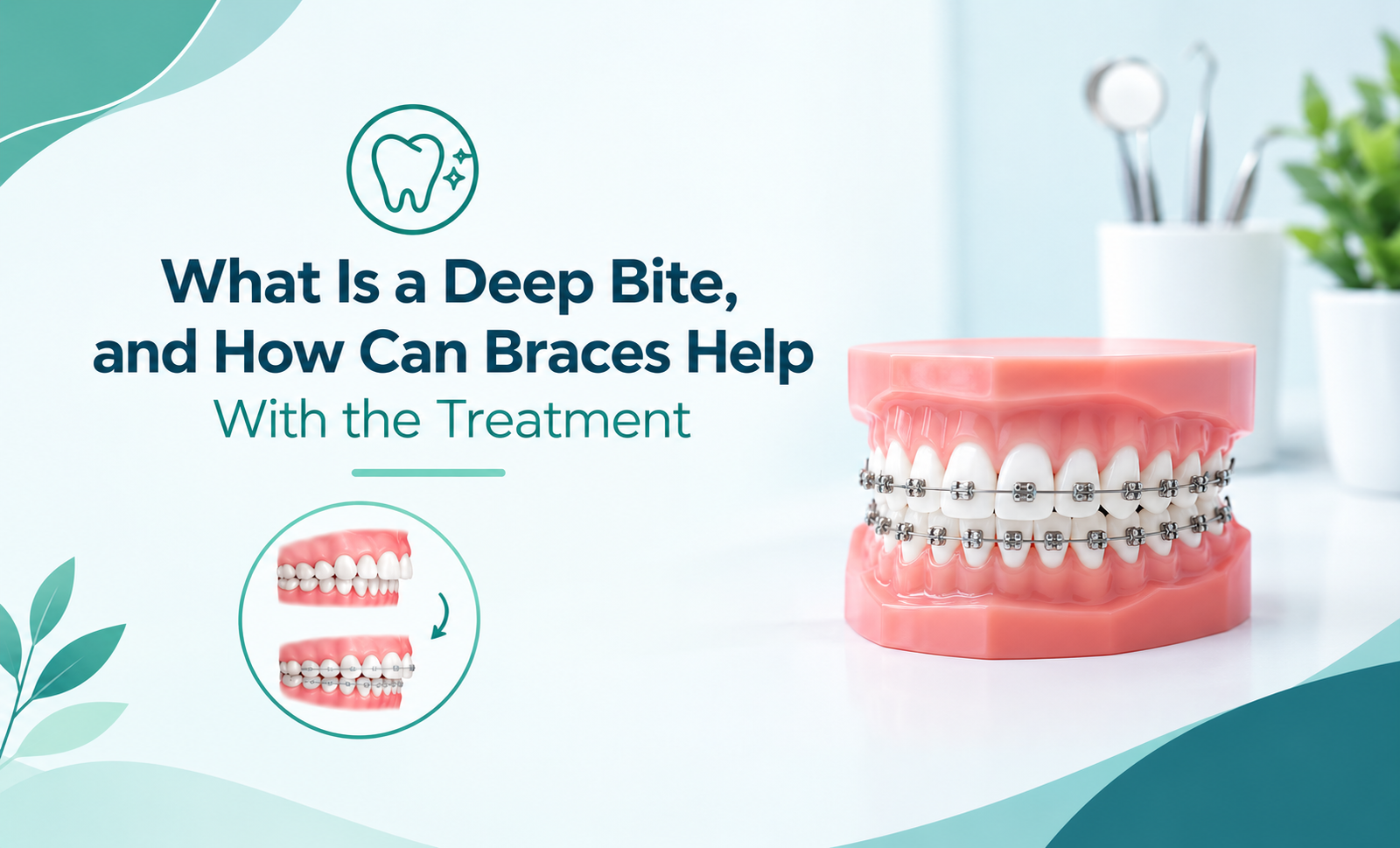
What Is a Deep Bite, and How Can Braces Help With the Treatment
When you look in the mirror, do your top teeth completely hide your bottom teeth when you bite down? If so, you may be living with a common dental issue known as a deep bite. While many people notice crooked or crowded teeth right away, a severe vertical overlap is a serious structural problem that often goes unnoticed until uncomfortable symptoms start showing up.
Leaving this condition unchecked can lead to rapid enamel wear, persistent jaw discomfort, and painful gum irritation. Fortunately, seeking proper orthodontic treatment for deep bite issues can safely realign your jaw, protect your natural teeth, and restore full confidence in your smile.
What Is a Deep Bite?
A deep bite, also called a deep overbite, occurs when the upper front teeth overlap the lower front teeth excessively when your back teeth are closed, a condition that often requires specialized deep bite treatment. In a healthy, normal bite, the upper front teeth cover only about 1 to 2 millimeters (roughly 10% to 20%) of the lower teeth.
In a severe case, the upper teeth completely cover ones, and the lower teeth may even bite directly into the roof of the mouth or the gums behind the top teeth. This is different from an open bite, where the teeth do not meet at all, or a crossbite, where some upper teeth sit inside the lower teeth.
Common Causes of a Deep Bite
Understanding why this condition develops is the first step toward choosing the right orthodontic solution, such as deep bite braces.
- Genetics and Jaw Structure: Inherited bone structure, such as a small lower jaw or an overdeveloped upper jaw, is a primary cause.
- Loss of Back Teeth: When back teeth are missing or worn down, the space between the upper and lower jaws collapses, causing the front teeth to overlap more deeply.
- Strong Jaw Muscles: Patients with very strong clenching or chewing muscles can compress their back teeth downward over time.
- Bad Oral Habits: Prolonged thumb sucking, tongue thrusting, or mouth breathing during childhood can alter healthy jaw growth.
Why You Should Treat a Deep Bite
A deep bite is not just a cosmetic concern; it significantly impacts your overall oral health, which is why consulting with an experienced deep bite orthodontist is recommended to address the issue before it worsens.
1. Excessive Tooth Wear and Damage
When upper and lower teeth rub together incorrectly, the outer enamel layer wears away quickly. This leads to sensitive teeth, chipped edges, and shorter, worn-down lower front teeth.
2. Gum Irritation and Soft Tissue Damage
In severe cases, the tips of the lower front teeth dig into the palatal tissue on the roof of the mouth. This leads to painful sores, bleeding gums, inflamed tissue, and even localized gum recession.
3. TMJ Disorders and Jaw Pain
An unnatural jaw position strains the temporomandibular joint (TMJ). Over time, this causes persistent jaw soreness, headaches, clicking sounds when opening the mouth, and neck tension.
4. Facial Structure and Esthetic Changes
A deep bite reduces the vertical distance between your nose and chin. This can make the lower half of your face appear shorter, giving your profile a prematurely aged appearance with thin, sunken lips.
How Braces Help Correct a Deep Bite
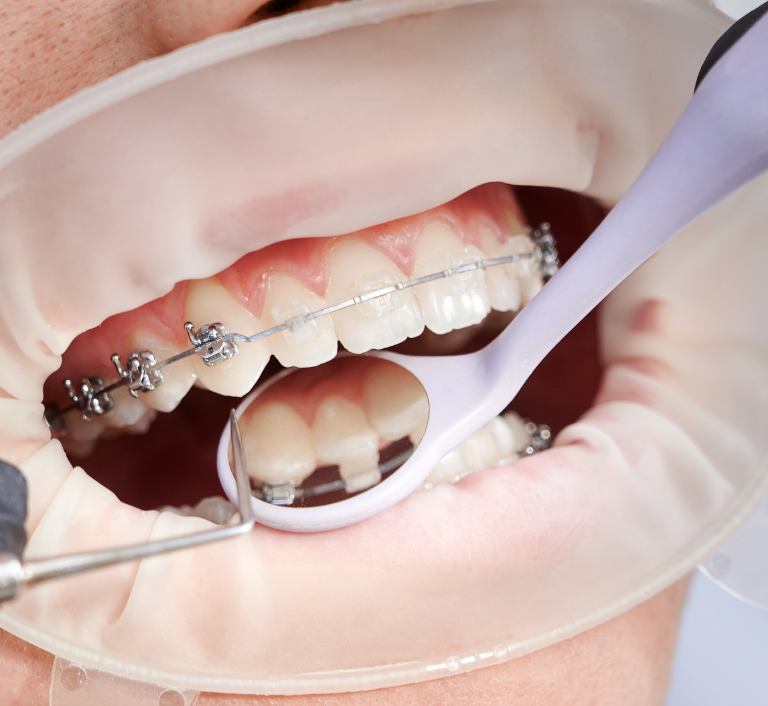
Correcting this condition requires precise movements guided by an experienced specialist. Orthodontists use specialized braces for teeth to shift both the teeth and the underlying bone level into proper alignment.
Here is how orthodontic appliances fix the issue:
- Intrusion of Front Teeth: The orthodontist applies gentle, continuous pressure to push the upper or lower front teeth back into the supporting jawbone.
- Extrusion of Back Teeth: By raising the height of the back molars, the orthodontist opens up the bite, creating necessary vertical space so the lower front teeth are no longer covered.
- Leveling the Dental Arch: Braces straighten and level the natural curve of your upper and lower arches (known as the Curve of Spee) to create balanced contact across all teeth.
Orthodontic Treatment Options for Deep Bite
Patients today have multiple treatment choices depending on their age, lifestyle, and severity of the condition.
Treatment Type | How It Works | Key Benefits |
Metal Braces | Uses high-grade stainless steel brackets and archwires to move teeth with high precision. | Highly effective for complex structural corrections; durable and reliable. |
Self Ligating Braces | Uses built-in sliding clips to hold the archwire instead of traditional rubber bands. | Reduces friction, offers smoother tooth movement, and requires fewer adjustments. |
Clear Aligners | Custom-made, removable clear plastic trays that gradually guide teeth into place. | Nearly invisible, highly comfortable, and easy to clean during daily meals. |
What to Expect During the Treatment Journey
Undergoing orthodontic care is a structured, step-by-step process designed for safety and efficiency:
- Initial Consultation and Diagnostics (Digital imaging and 3D scans):
Your specialist examines your mouth, takes digital X-rays, 3D intraoral scans, and facial photographs to analyze your jaw alignment and bone structure.
- Customized Treatment Planning (Mapping movement and appliance selection):
The orthodontist creates a step-by-step movement plan tailored to your specific bite, deciding whether to use self ligating braces or alternative appliances.
- Appliance Fitting and Placement (Setting up your braces):
Brackets are carefully bonded to your teeth, and the initial archwires or custom trays are placed to begin gentle tooth movement.
- Regular Adjustments and Monitoring (Visits every 4 to 8 weeks):
You visit the clinic periodically so the specialist can adjust wires, add small bite ramps or elastics, and monitor bite progress.
- Retention Phase (Locking in your new smile)
Once your bite is completely corrected, retainers are provided to keep your teeth in their new, healthy positions for life.
Transform Your Smile with BRACESAURUS
If you want to fix your bite with expert care, BRACESAURUS offers dedicated, specialized alignment services and the best teeth braces in Singapore has to offer. Our entire practice focuses purely on orthodontic care, ensuring every treatment plan is tailored for optimal comfort, precision, and lasting health.
We believe quality orthodontic treatment should be accessible to everyone. That is why we provide transparent pricing with cheap and affordable payment plans designed to fit your budget. Whether you prefer discreet clear aligners or advanced self-ligating braces, we offer invisible, highly comfortable options to transform your smile seamlessly. Visit BRACESAURUS today to book your personalized consultation and step confidently into a healthy, perfectly aligned smile.
FAQ's
No, while a straighter smile is the most visible result, braces do much more. They correct bite problems, improve chewing, reduce uneven tooth wear, and make brushing and flossing easier, supporting better long-term oral health.
Most braces treatment takes between 12 and 24 months, though timelines vary depending on case complexity, the type of braces used, and how closely you follow your orthodontist’s instructions, including wearing recommended elastics or appliances.
Clear aligners work well for mild to moderate cases, offering a discreet alternative to braces. More complex bite or alignment issues may still need braces, so get an assessment first.
Yes, adults can benefit from braces as much as younger patients, often seeing improvements in bite function, oral health, and confidence, with modern options like ceramic braces and clear aligners.
Around age seven is ideal for a first orthodontic consultation, letting orthodontists monitor jaw growth, spot early bite problems, and plan treatment at the right time.