
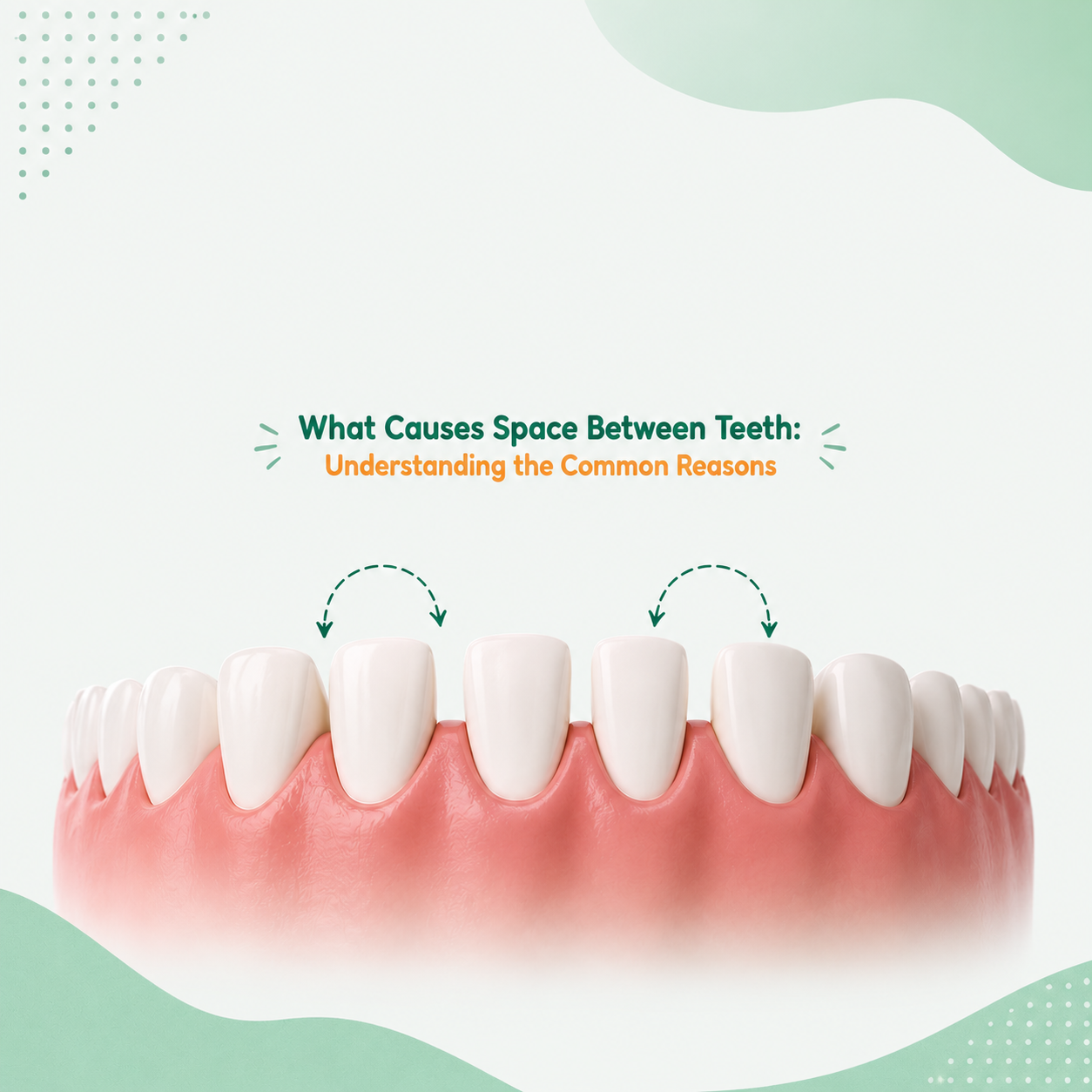
What Causes Space Between Teeth: Understanding the Common Reasons
You are smiling for a photo and suddenly notice a small gap between your teeth that never quite bothered you before. Maybe it’s always been there, or maybe it seems wider than you remember. Either way, it’s natural to wonder whether something is wrong or whether you need to do anything about it.
Here’s the reassuring part: gaps between teeth are more common than you think, and in many cases, they are completely harmless. That said, understanding why the gap is there matters because the cause shapes the solution, whether that’s braces for teeth or one of today’s modern alignment options.
Why Do Spaces Form Between Teeth? Common Causes Explained
Spaces between teeth, medically called diastema, develop for a number of reasons. Some are purely genetic, others develop over time, and a few are linked to lifestyle habits. Here’s a look at the most common reasons:
Jaw and Teeth Size Mismatch
Extra space naturally forms between them when your jaw is larger than the size of your teeth. This is one of the most frequent causes of gaps and often runs in families, so if a parent had a gap, there’s a fair chance you might too.
Missing or Undersized Teeth
The surrounding teeth can gradually drift apart when a tooth is missing entirely or smaller than average. This can be genetic or the result of tooth loss later in life.
Gum Disease and Weak Support
Think of your gums as anchors for your teeth. Once gum disease weakens them, teeth slowly start shifting and drifting apart, creating gaps that simply weren’t there before.
Childhood Habits Like Thumb Sucking and Tongue Thrusting
It might seem like an innocent habit, but the repeated pressure from thumb sucking or pushing the tongue against the front teeth can gradually nudge teeth out of alignment, leading to visible spacing.
Abnormal Frenum Attachment
The frenum is the small band of tissue connecting your upper lip to your gums. If it’s unusually thick or sits too low, it can physically block the front teeth from closing together naturally.
Why Do Gaps Between Teeth Remain Even After Growing Up?
This is something many adults wonder about, and yes, gaps can absolutely persist or appear in adulthood. Your jaw structure, any missing teeth, or gradual shifting over the years can all contribute. Many adults look into teeth braces in Singapore specifically to address these changes later in life.
Even if your smile looked perfectly aligned in your teens, natural aging, bone density changes, and tooth movement can alter things. Sometimes gaps widen slowly due to untreated dental concerns. The good news is that modern orthodontic treatments cater to adults just as effectively as they do to teenagers, so it’s never too late to explore your options.
Can Teeth Gaps Affect Oral Health Over Time?
Honestly, yes, and it’s worth taking seriously. Small gaps might seem harmless, but they can trap food easily, leading to plaque build-up and cavities over time. If the gap is linked to gum disease or a bite issue, things can gradually get worse if left alone.
Uneven biting pressure can also cause wear and even jaw discomfort down the line. So it’s not just a cosmetic thing, there’s real dental health at stake.
Getting the right help early, whether that’s braces for teeth or clear aligners Singapore patients prefer, makes a genuine difference long-term.
Is It Possible to Close Teeth Gaps Without Braces?
Dental bonding can make a small gap look better, but it doesn’t actually move your teeth or fix what’s causing the problem in the first place. If the gap is anything more than tiny, orthodontic treatment is honestly the smarter, longer-lasting choice.
Options like transparent teeth braces systems or clear aligners for Singapore patients are increasingly being offered as a more discreet route to straighter teeth. Many people also factor in invisible teeth braces price when exploring their choices, and the good news is that modern options are far more accessible and comfortable than they used to be.
How BRACESAURUS Helps You Fix Teeth Gaps with the Right Treatment?
When it comes to fixing gaps, who you see matters just as much as what treatment you choose. BRACESAURUS is a dedicated Braces Specialist in Singapore, and orthodontics is literally all we do. That means you’re never an afterthought between fillings and cleanups.
Here’s what makes us stand out:
- Personalised plans built around your specific gap, bite, or spacing concern
- Multiple treatment options like traditional braces, self-ligating systems, and aligners
- Affordable pricing, with student-friendly options available
- Specialist guidance at every single step
Our goal is simple: to deliver the best teeth braces in Singapore for every patient, every time.
Start Your Smile Journey with BRACESAURUS Today
If you have been noticing gaps and putting off doing something about them, now really is a good time to act. A well-aligned smile isn’t just about appearances; it supports better oral health, easier cleaning, and long-term dental stability.
BRACESAURUS offers specialist-only care at an affordable price, which means you won’t be seen as just another general patient. Whether you are curious about braces for teeth or leaning towards aligners, our team will walk you through everything clearly and help you make the right call.
Book your consultation today and take that first step towards a smile you feel good about.
FAQ's
Yes, gaps are very common and often harmless. However, identifying the underlying cause helps determine whether treatment is actually necessary for your situation.
Yes, braces are among the most effective long-term solutions for closing gaps and improving overall tooth alignment in a permanent, controlled way.
They can. Untreated gaps may widen gradually due to shifting teeth, progressive gum issues, or adjacent teeth moving into spaces left by missing ones.
Aligners offer discretion and comfort, but the best option depends entirely on your dental condition, gap severity, and what your orthodontist recommends.
There’s usually mild discomfort in the first few days after adjustments, but it settles quickly as your teeth adapt to the gradual movement involved.