

Patient’s Guide: What to Expect When Starting Treatment with Self Ligating Braces
Are you thinking about getting braces but unsure what the experience will actually be like? It’s a common concern, especially when you’re weighing different treatment options and trying to understand what fits your lifestyle and expectations. From comfort and appearance to efficiency and long-term results, there’s a lot to consider before starting orthodontic treatment. That’s why more patients today are choosing self-ligating braces, a modern approach designed to offer effective alignment with greater comfort and control. This guide will walk you through what to expect when starting treatment with self ligating braces and how expert care can help you in this journey.
How Do Self-Ligating Braces Work?
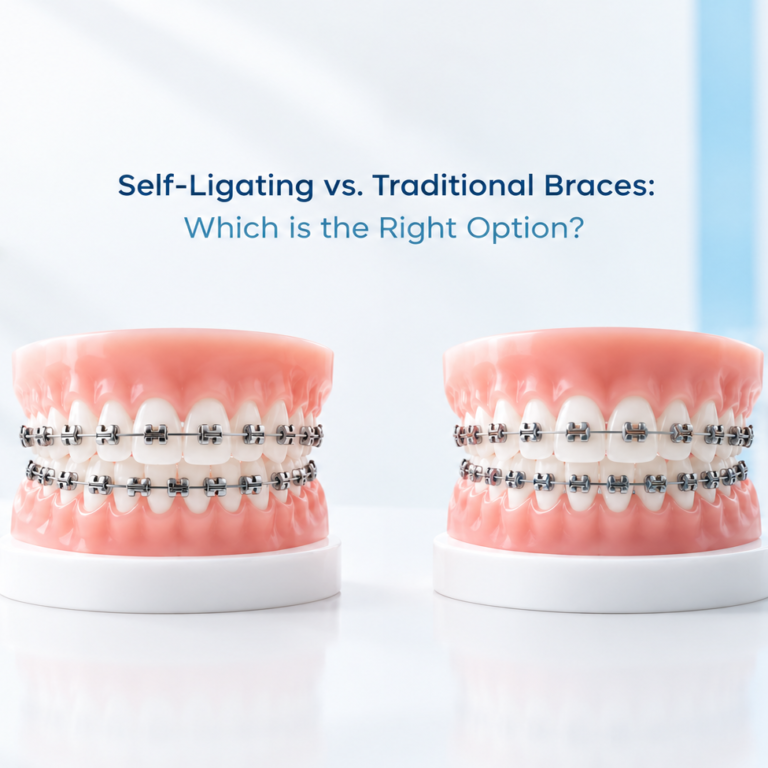
Traditional braces use elastic bands or metal ties (ligatures) to hold the archwire in place. While effective, these ligatures can increase friction between the wire and the brackets, sometimes slowing tooth movement and making adjustments less comfortable.
Self-ligating braces eliminate the need for elastic ties. Instead, each bracket has a built-in mechanism that secures the wire. This design allows the wire to move more freely, reducing resistance and enabling controlled, efficient tooth movement.
There are two main types of self-ligating systems:
- Active self-ligating brackets apply gentle pressure to the wire using a spring-loaded clip, actively assisting tooth movement.
- Passive self-ligating brackets, such as Damon braces, hold the wire without applying pressure, allowing teeth to slide naturally along the wire.
The choice between these systems depends on your orthodontic needs, bite condition, and treatment goals. A specialist orthodontist will recommend the most suitable option after a thorough assessment.
What to Expect When You Start Treatment
Starting treatment with self-ligating braces is an adjustment, but knowing what lies ahead can make the experience far more comfortable and predictable. Whether you’re choosing self ligating braces in Singapore as an alternative to traditional braces or comparing them with aligners, here’s what most patients can expect in the early stages.
1. A Detailed Assessment Before Your Braces Are Fitted
Before your self-ligating braces for teeth are placed, your orthodontist will carry out a comprehensive evaluation. This typically includes digital scans or impressions, X-rays, and bite analysis. These records allow the orthodontist to plan precise tooth movements and decide which option is most suitable for your case. This planning stage is essential for achieving efficient and predictable results.
2. The Braces Fitting Appointment
The placement of self-ligating braces is generally smooth and well-tolerated. Brackets are bonded to your teeth, and the archwire is secured using the built-in clip system; no elastic ties are involved. Due to this design, fitting appointments are often quicker than those for traditional braces. Patients who have explored both braces and the top aligners in Singapore are often surprised by how comfortable the initial fitting feels.
3. Mild Pressure or Tightness in the First Few Days
It is normal to feel pressure or tightness shortly after your braces are fitted. This sensation is a sign that the braces are working. According to orthodontic research, discomfort typically peaks within the first 24–72 hours and gradually subsides. Many patients report that self-ligating braces feel gentler compared to traditional systems, largely due to reduced friction and lighter forces.
4. Minor Speech and Eating Adjustments
In the early days, you may notice slight changes in speech or chewing patterns. Soft foods are usually recommended at first, as your teeth adjust to the new forces. These changes are temporary, and most patients adapt quickly. Compared to some removable systems, self-ligating braces remain fixed in place, which helps maintain consistent treatment progress.
Factors That Influence Treatment Progress
Orthodontic treatment does not follow a fixed timeline. Several factors determine how efficiently your teeth respond to braces.
- Age and Bone Density
Younger patients often experience faster tooth movement because their jawbones are still developing. Adults may require more time due to denser bone structure, but outcomes are equally predictable and stable when treatment is properly planned.
- Type and Complexity of the Orthodontic Issue
Mild crowding or spacing issues generally respond more quickly than complex bite corrections or severe misalignment. Each tooth must move in a controlled, precise manner, and complex cases require careful sequencing.
- Patient Compliance
Following your orthodontist’s instructions plays a critical role. Wearing elastics when prescribed, maintaining oral hygiene, attending scheduled visits, and avoiding damaging foods all contribute to steady progress. Non-compliance can delay treatment and compromise results.
BRACESAURUS: The Best Choice for Self-Ligating Braces in Singapore
Selecting the best dental clinic for self ligating braces is as important as choosing the braces themselves. BRACESAURUS focuses exclusively on orthodontic care and is led by Dr Wee Teng Yau, an MOH-accredited orthodontic specialist.
What sets BRACESAURUS apart:
- Specialist-led orthodontic care with over 20 years of experience
- Expertise in self-ligating systems, including Damon braces
- Treatment plans tailored for teenagers, students, and adults
- Transparent pricing and clear communication
- A clinic vision focused on becoming the go-to destination for braces in Singapore
Dr Wee’s background includes extensive experience at the National Dental Centre Singapore and Mount Elizabeth Medical Centre, ensuring every patient receives evidence-based, professionally guided care.
If you are considering self-ligating braces or Damon clear braces in Singapore and want care guided by experience, precision, and long-term results, BRACESAURUS offers specialist-led orthodontic treatment you can trust.
Book a consultation with BRACESAURUS today to receive a personalised assessment and begin your journey toward a confident, well-aligned smile.
FAQ's
Yes. Self-ligating braces are effective for both teenagers and adults and are commonly used for a wide range of orthodontic conditions.
In many cases, yes. Adjustments are often quicker and less frequent compared to traditional braces.
Yes. Damon braces are a popular passive self-ligating system designed to reduce friction and improve comfort.
Yes. They are widely used by orthodontists to manage crowding, spacing, and complex bite corrections.
Look for an MOH-accredited orthodontist with specialist training, extensive experience, and a clinic dedicated to orthodontic care.