
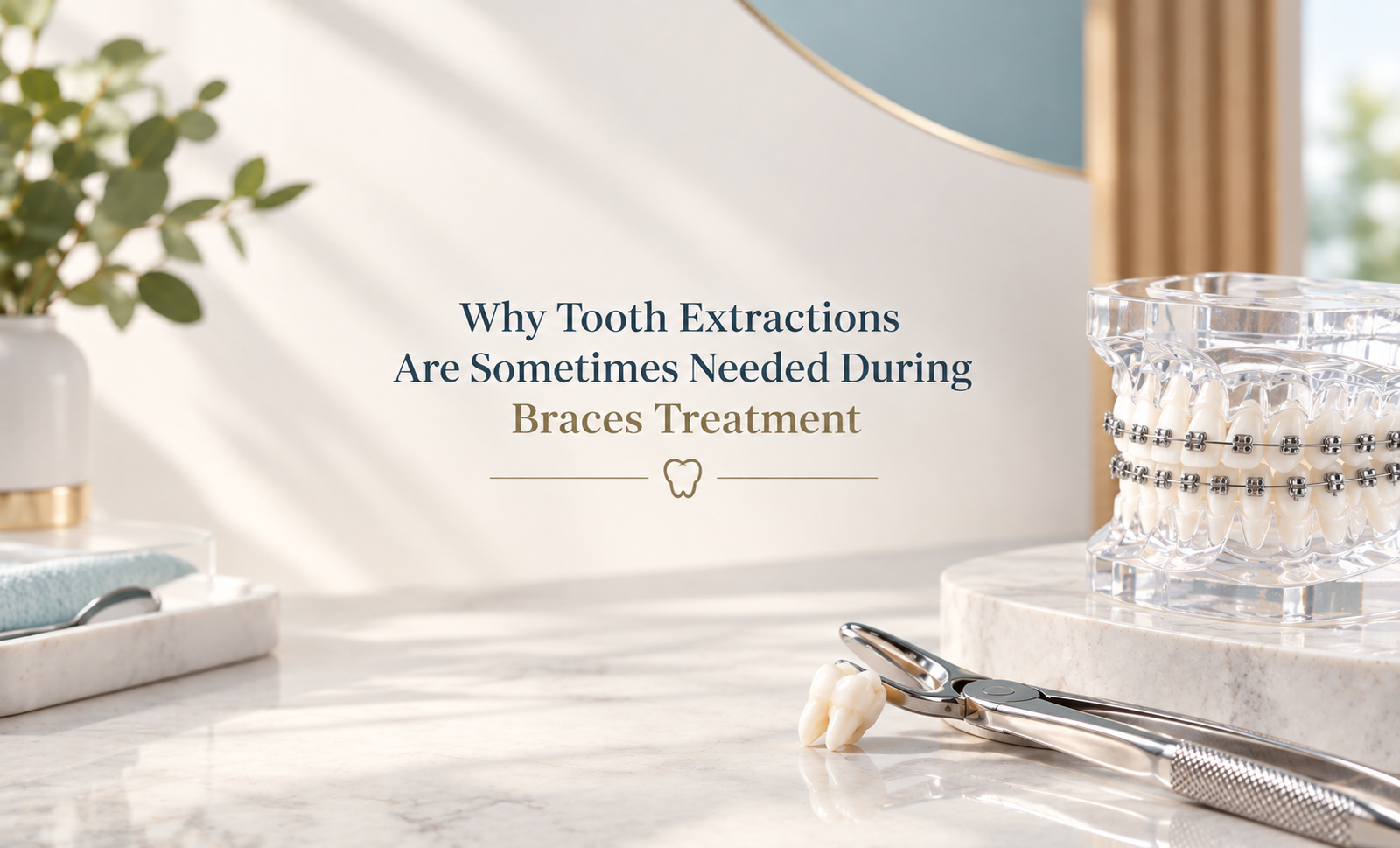
Why Tooth Extractions Are Sometimes Needed During Braces Treatment
Tooth extraction for braces can sound worrying when you are preparing for orthodontic treatment. Many patients wonder why a healthy tooth would need to be removed simply to straighten the others. However, in some cases, creating additional space is necessary to achieve a stable, functional, and balanced smile.
At BRACESAURUS, the decision to remove teeth is not taken automatically. The orthodontist carefully evaluates your teeth, jaw, bite, facial profile, and available space before recommending an extraction. In borderline cases, a conservative approach may be considered first.
Understanding why extractions may be recommended can help you feel more prepared for your orthodontic journey.
Why Is Space Important During Orthodontic Treatment?
Your teeth need enough room to move into their planned positions. When the jaw does not have sufficient space for all the teeth, simply moving them into alignment may create other problems.
For example, severely crowded teeth may need to be moved outward if no space is created. This can make the front teeth appear more prominent and may affect the gums or overall facial appearance.
Creating space through extraction can allow the remaining teeth to move into healthier positions. The spaces created by the extraction are usually closed during treatment, so there is generally no visible gap left at the end.
When Might Tooth Extraction Be Recommended?
There are several situations where removing teeth may be considered. Two of the most common reasons are significant crowding and prominent front teeth.
Severe Dental Crowding
Crowding happens when there is not enough room for all the teeth to fit properly within the dental arch. Teeth may overlap, rotate, or sit behind or in front of neighbouring teeth. Mild crowding may sometimes be corrected without removing teeth. However, when the lack of space is significant, extraction can provide the room required to align the remaining teeth properly.
Without sufficient space, attempting to straighten severely crowded teeth may push them too far outward. This can affect aesthetics and, in some cases, contribute to gum recession.
Prominent Front Teeth
Some patients have upper front teeth that project significantly forward. If these teeth are simply aligned without creating enough space, they may remain prominent even after treatment.
In suitable cases, removing premolars creates space that allows the front teeth to move backwards. This can improve both dental alignment and the overall appearance of the smile and lips.
What Teeth Are Usually Removed?
When extraction is necessary for orthodontic purposes, premolars are commonly selected. Premolars are located between the front teeth and the larger molars at the back. Depending on the patient’s dental condition, one or more premolars may be removed. In some treatment plans, up to four premolars may be extracted.
The choice depends on factors such as crowding, tooth position, bite relationship, facial profile, and the amount of space required. The goal is not simply to remove teeth. It is to create space strategically so the remaining teeth can be positioned correctly.
Does Everyone Need Teeth Removed Before Braces?
No. Extraction is not necessary for everyone who undergoes orthodontic treatment.
Some patients have enough existing space to align their teeth without removing permanent teeth. Others may benefit from techniques that create limited space between teeth or expand the dental arch where clinically appropriate. At BRACESAURUS, a conservative approach is preferred when a predictable result can be achieved without extraction. For borderline cases, treatment may sometimes begin without extractions, followed by reassessment after initial alignment.
This approach allows the orthodontist to evaluate how the teeth respond before making a final decision where appropriate.
What Happens Before an Extraction Is Recommended?
A detailed assessment should be completed before deciding whether extraction is required. This usually involves dental photographs, X-rays, dental impressions or digital scans, and an examination of the teeth and bite.
The orthodontist considers several factors, including:
- Amount of dental crowding
- Position of the front teeth
- Jaw size and shape
- Existing bite relationship
- Facial profile
- Gum condition
- Tooth angulation
- Overall treatment objectives
This assessment is particularly important because removing teeth unnecessarily can affect the final treatment outcome. An experienced orthodontist can determine whether extraction is genuinely needed and which teeth are appropriate to remove.
Make an Informed Start With BRACESAURUS
Tooth extraction can be an important part of some orthodontic treatment plans, but it is not required for everyone. BRACESAURUS takes a careful and conservative approach, assessing each patient’s teeth, bite, and facial profile before recommending extraction. If you are considering treatment, book your braces consultation Singapore appointment to understand your options.
With specialist care, transparent treatment planning, and affordable solutions, BRACESAURUS can help you take the right step towards a healthier, well-aligned smile.
FAQ's
No. Many patients can achieve good results without extraction. The need depends on crowding, tooth position, bite, jaw structure, facial profile, and the overall orthodontic treatment plan.
Premolars are often selected because their position provides useful space for moving crowded or prominent front teeth. This allows orthodontists to improve alignment while maintaining a balanced and functional bite.
Yes. Braces gradually move neighbouring teeth into the spaces created by extraction. Your orthodontist carefully controls tooth movement throughout treatment to achieve proper alignment and a balanced final bite.
BRACESAURUS specialises in braces and does not perform tooth extractions. If extraction is required, the orthodontist will provide details about which teeth need removal before treatment begins.
Sometimes. BRACESAURUS considers non-extraction treatment when clinically suitable, especially in borderline cases where sufficient space may be created through other orthodontic approaches without removing permanent teeth.